

Carpenter Bees
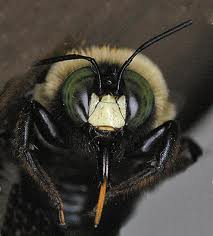
Carpenter Bees are very large bees with shiny black bottoms. These bees burrow into woodwork making tunnels (known as “galleries”), which form the nest. The bees lay eggs in the tunnels, coming and going from the nest, as they collect pollen to feed to the developing larva. Carpenter Bees damage the trim and siding of your homes as they build. Carpenter Bees are a prime food source for Woodpeckers and other birds that chip at wood for insects. After these animals locate a nest they begin digging into the wood to eat the bees, causing even more damage. Most people will notice Carpenter Bees hanging around sections of their home in the spring – particularly males. The males which have a yellow face (Fig1) will buzz bomb you though they are harmless and have no stinger. The males naturally die off by June. They can be annoying but are easily dispatched with a tennis racquet. Although they are not aggressive, it is important to distinguish females from male bees by their black face, because they do sting.
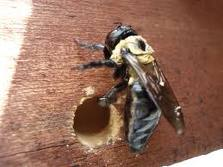
Another identifying feature of the Carpenter Bee are the piles of wood shavings from the excavation of the wood (sometimes mistaken for carpenter ant activity), just below the location of their Galleries. If the bees have nested in the trim of a home along the roof line, you’ll see soffit staining on the side of the house. This is caused by the pollen that is being knocked off the bee as it enters the hole in the wood it uses for its nest. These stains will be yellow (from the pollen), and black from the mold that grows on the pollen stain.
Treatment
There are a couple of ways to treat this problem and the first is through prevention. Carpenter Bees like natural seasoned, uncoated, wood. If woodwork is painted the bees will usually leave it alone. Replacing any damaged area with pressure treated wood or plastic boarding also works. If you have a natural sided home or a log cabin you will need regular servicing each year from us that includes an inspection of your home and treatment in areas that are potential nest sites, to keep carpenter bees from becoming a problem.
Bumble Bees
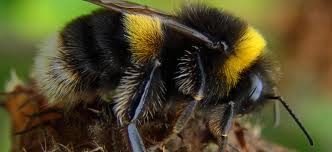
Bumble bees look a lot like Carpenter Bees but they do have distinguishing features. Bumble Bees have a fuzzy bottom, unlike the Carpenter bee that has a bald, shiny bottom. Bumble bees come in a variety of different sizes. Most however, are ½ inch to almost a full inch in size. Bumble Bees do sting and can be dangerous if they become aggressive. If a nest is disturbed As a defensive action to warn intruders, they will of make a very loud and collective, buzzing noise that is unmistakable, to warn intruders. Bumble bees like to void nest (they look for hollow spaces), in chipmunk holes under leaf piles, wall voids of homes, etc. Like the Carpenter bee, Bumble Bees collect pollen for food to feed the developing larvae, and will be seen coming and going from the nest. Bumble Bees continue building nests through the summer season and it is quite common for a nest to house over a few hundred workers by the end of the summer. The nest workers will all die at the end of the summer and a brood of new queens will over winter to start new nests the following spring, which is why it is so important to treat the site before it becomes a problem.
Treatment
For homeowners, simply sealing cracks and holes around the home that would allow Bumble bees to enter a wall void is a good method of prevention. Regular service with our yearly service plan will prevent, or treat if necessary, any nest site.
Honey Bees
These are the bees we all know, that make the honey we love.
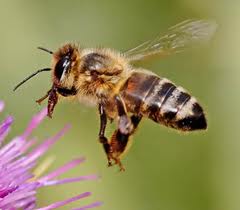
It is difficult to provide a clear way to identify these bees, they are non-descript and resemble other insects including some flies. In general they have a round bottom, they’re bald, and are generally just shy of ½ inch in length. We at Ecotech Pest Control, do not service for Honey Bees. There are two reasons for this. First, honey bees are dangerous, very dangerous when provoked, and need a specialized bee keeper to remove the nest without damaging it. Honey bees are a valued resource, they pollinate everything we eat, and most plants and trees we grow. They need to be preserved. If you have an established nest on your property then please call us and we will put you in contact with a bee keeper, whose job it will be to remove and relocate the nest, to give it a new home.
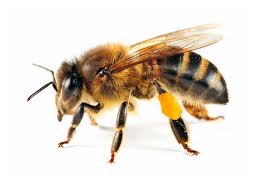
If you are experiencing a swarm that has landed on your property the best action you can take is to stay away from it and give it 24 hrs to move on. They usually do. The reason the swarm has landed is most likely that the Queen of the swarm is tired. The swarm will continue on it’s way after resting, or just camping out for the night. Although so many bees are a little unnerving, Swarms are not aggressive if you stay away from them.